

In 2025, the Transportation Management System (TMS) evolves into a strategic command center for intelligent, adaptive, and sustainable logistics, moving beyond basic load planning. This transformation is fueled by volatile supply chains, shifting customer expectations, and strict ESG mandates, positioning modern TMS platforms as real-time orchestration engines that deliver enterprise-wide value.

The Anatomy of a Modern TMS:
- People & Organizational Structure: A people-centric transformation, requiring clear roles (planners, analysts, drivers, finance, CX teams), interconnected workflows, an agile culture, and cross-functional champions.
- End-to-End Transportation Processes: Comprehensive management from order to settlement, including intelligent route planning, dynamic replanning, real-time tracking, exception handling, and automated freight audits. Returns and reverse logistics are now vital for circular supply chains.
- Sustainability & Resilience: ESG is natively integrated. Features include route-level carbon accounting, modal shift recommendations (e.g., road to rail or EV), and resilience scoring with risk playbooks, helping companies meet ESG goals through CO2 emission estimates and greener options.
- Fleet, Driver & Asset Intelligence: Deep connection to physical assets via IoT for fleet telematics, vehicle diagnostics, yard/dock sensors, driver HOS compliance, rostering, and maintenance scheduling.
- Ecosystem Integration: The TMS serves as the central hub, offering seamless API integration with ERP (SAP, Oracle), WMS, CRM, carriers, brokers, and 3PLs for real-time data flow and global orchestration through control tower dashboards.
- Master Data & Network Intelligence: Relies on accurate, dynamic data like route guides, geo zones, carrier contracts, rate cards, dynamic capacity calendars, and customer preferences to enhance decision-making.
- Automation & Decision Intelligence: Increasingly AI/ML-driven, with models for load planning, ETA prediction, delay alerts, and agentic AI for optimal carrier selection. Digital twins facilitate “what-if” simulations for disruption management.
- User Experience (UX): Adaptive and intuitive UX for widespread adoption, including driver mobile apps, carrier portals for self-service, customizable analyst dashboards, and multilingual, accessible, responsive design.
- Compliance, Risk & Governance: Built-in controls for operational integrity, covering Hazmat, HOS, customs, and border compliance, along with carrier vetting, contract adherence, regulatory audit trails, and cybersecurity.
- Financial Control & Profitability: Manages margins through automated freight audits, accessorial charge validation, auto-approvals, landed cost modeling, and revenue leakage detection, leading to significant ROI (10–20% cost reductions).
- Analytics That Drive Decisions: Provides real-time visibility into performance, cost per mile, carrier benchmarking, ROI tracking, and strategic simulations for lane shifts and mode swaps, plus detailed sustainability analytics like CO₂ saved.
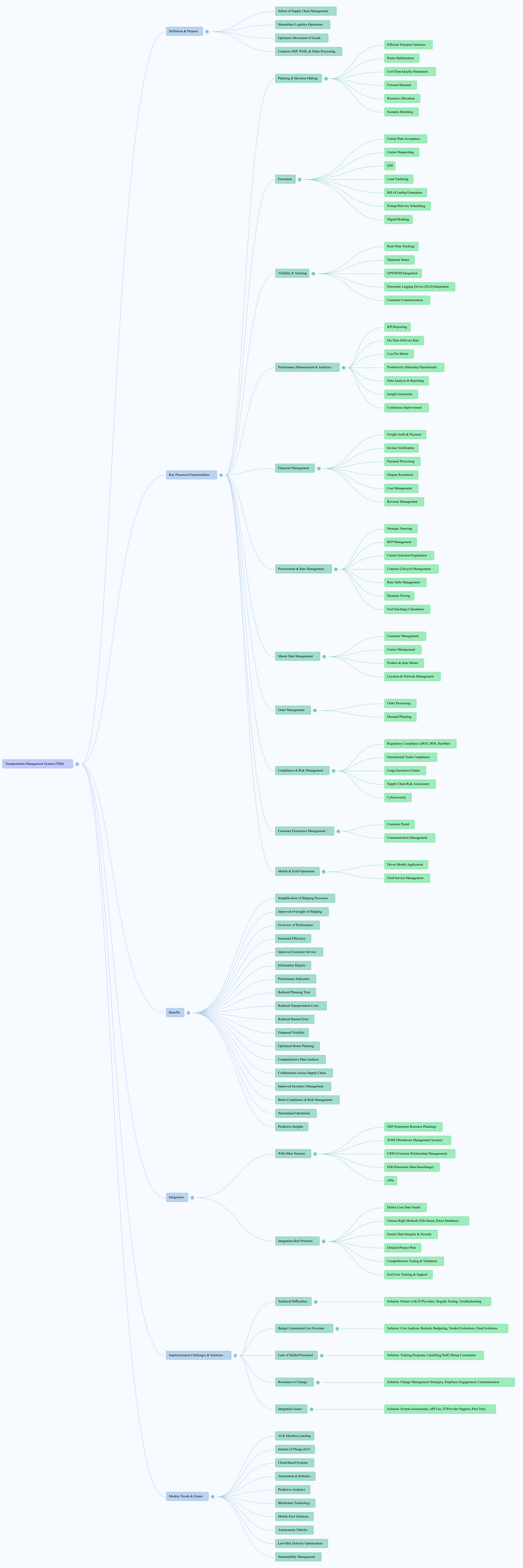
From Systems to Strategic Platforms:
The 2025 TMS is:
- Composable: Modular architecture for agile deployment.
- Real-Time: Powered by streaming data and live decision-making.
- Cognitive: Embedded AI logic for intelligent operations.
- Customer-Centric: Offers transparency and flexibility.
- Sustainable: Enables climate and compliance goals.
Ultimately, a modern TMS in 2025 is a strategic platform that intelligently and in real-time orchestrates resilience, cost-efficiency, service quality, and sustainability. It acts as the brain and backbone of supply chain execution, moving beyond mere freight management to drive holistic logistics transformation.
Credits: ChatGPT by OpenAI and Gemini by Google for Content Elaboration based on my TMS Mindmap. NotebookLM by Google for helping visualize the mindmap based on the input.

Leave a comment