
Innovation is the heartbeat of progress, but turning bold ideas into reality requires a clear path. The Art of the Possible (AOP) Framework is a strategic guide that helps organizations discover, prioritize, and bring to life transformative solutions by connecting emerging technologies with business needs. Whether you’re a small business exploring new opportunities or a global enterprise aiming to redefine your industry, the AOP Framework offers a structured yet flexible approach to make innovation achievable. Let’s explore how this framework sparks creativity and drives results.
What is the Art of the Possible Framework?
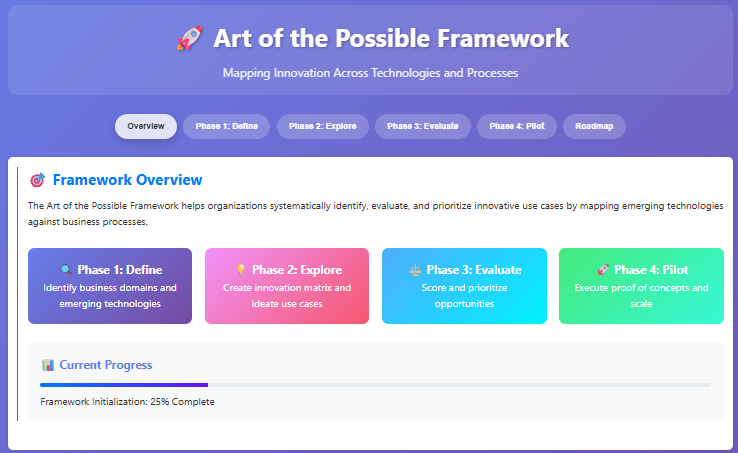
The AOP Framework is a roadmap for innovation, designed to align cutting-edge technologies with business challenges. It breaks the complex process of innovation into four intuitive phases: Define, Explore, Evaluate, and Pilot. By guiding teams through each step, it ensures that ideas are not only creative but also practical and impactful.
The framework’s strength lies in its ability to foster collaboration and clarity. It encourages teams to think big while grounding their efforts in strategic priorities. From healthcare to retail, the AOP Framework helps organizations of all kinds unlock new possibilities.
The four phases are:
- Define: Identify key business areas and technologies to explore.
- Explore: Brainstorm solutions where technologies meet business needs.
- Evaluate: Prioritize ideas based on their potential impact.
- Pilot: Test and scale the most promising solutions.
Each phase builds on the last, creating a cycle of continuous innovation.
Phase 1: Define — Finding Your Focus
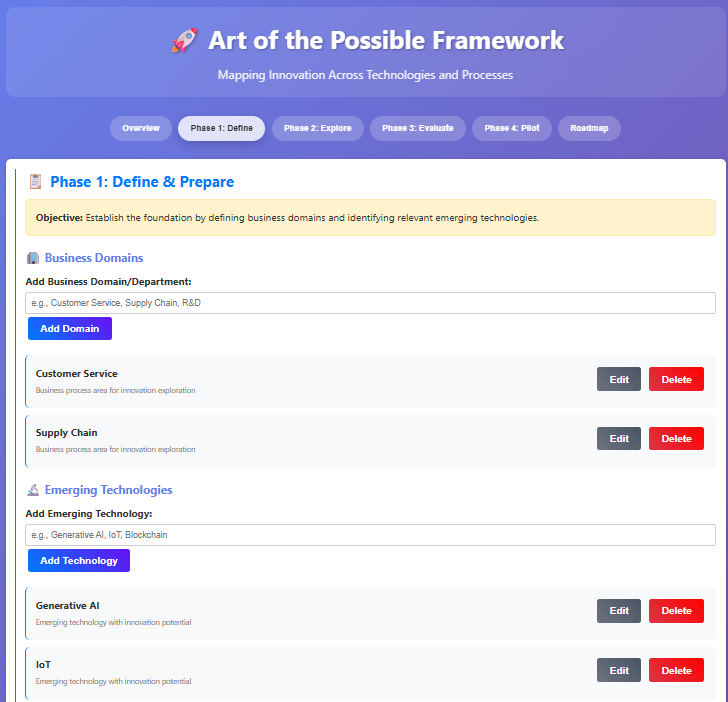
The Define phase is about setting the stage for innovation. Here, organizations pinpoint the business areas (like customer service or supply chain) where change can make the biggest difference. They also select emerging technologies (such as AI or IoT) with the potential to transform those areas.
For example, a retailer might focus on “Customer Experience” and explore “Generative AI” to personalize shopping. This phase is about asking, “Where can we create value?” and “What tools can help us get there?” By narrowing the scope, teams ensure their efforts are targeted and meaningful.
Phase 2: Explore — Sparking Big Ideas
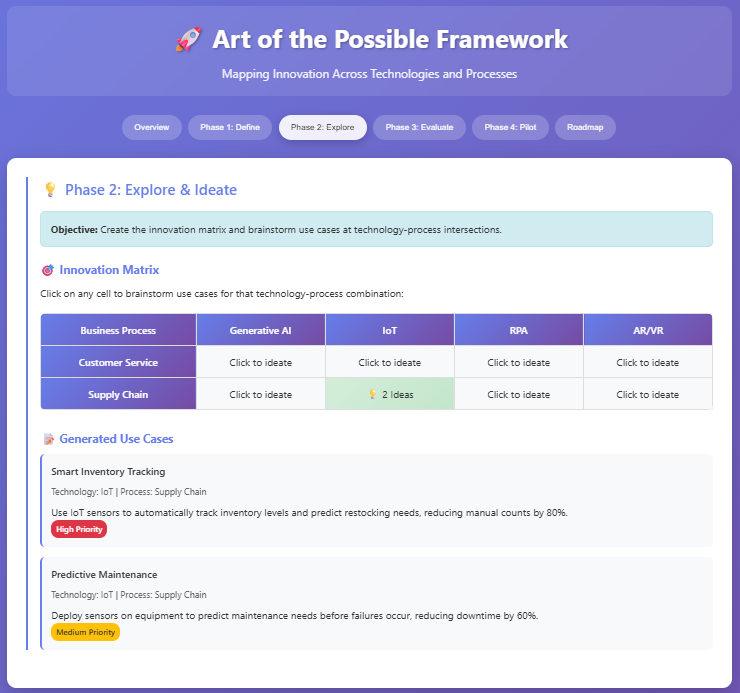
The Explore phase is where creativity takes center stage. Using an Innovation Matrix, teams map technologies against business areas to brainstorm solutions. Each intersection is a chance to ask, “What if?” — what if AI could streamline customer support, or Blockchain could secure supply chains?
For instance, combining “IoT” with “Supply Chain” might inspire a solution for real-time inventory tracking. Teams capture these ideas with details like the problem they solve and the value they create. The matrix makes it easy to see where ideas are flourishing and where more brainstorming is needed.
Phase 3: Evaluate — Choosing What Matters
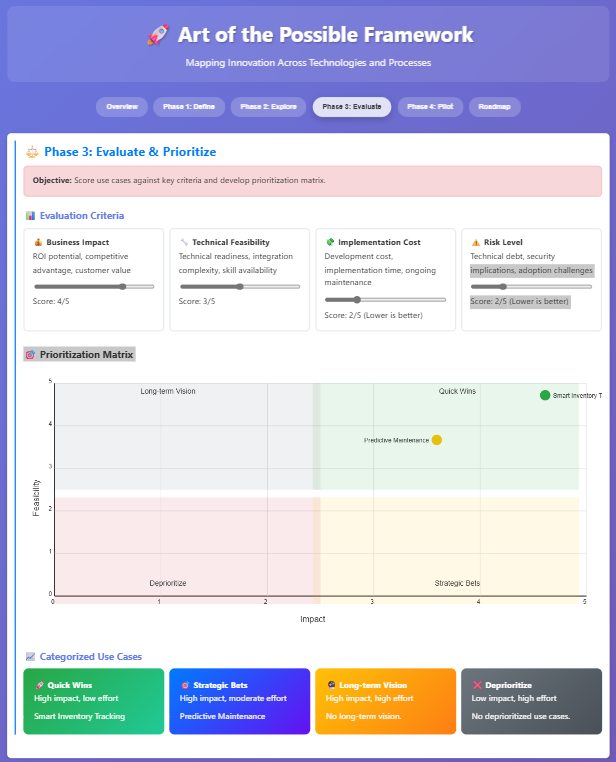
Not every idea can move forward, so the Evaluate phase helps teams focus on the best ones. Ideas are scored based on their potential impact (e.g., revenue growth, customer satisfaction) and feasibility (e.g., cost, resources). A Prioritization Matrix then visualizes these scores, grouping ideas into four categories:
- Quick Wins: High impact, easy to implement.
- Strategic Bets: High impact, worth some effort.
- Long-term Vision: High impact, but complex.
- Deprioritize: Low impact, not worth pursuing.
For example, an AI-powered chatbot might land in “Quick Wins,” signaling it’s ready for action. This phase empowers teams to make smart, data-driven choices about where to invest their energy.
Phase 4: Pilot — Turning Ideas into Reality
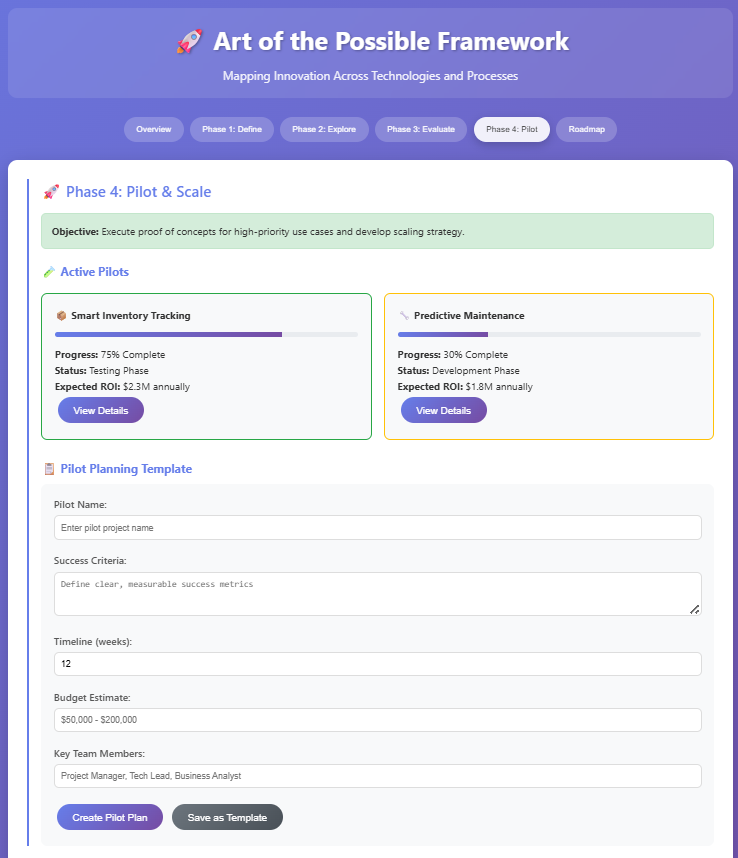
The Pilot phase brings ideas to life through small-scale tests. Teams define success metrics (e.g., cost savings, user adoption) and timelines for each pilot, then track progress to see what works. Successful pilots pave the way for broader implementation, while lessons from failures refine future efforts.
For example, a pilot for smart inventory tracking using IoT might test real-time stock monitoring in a warehouse over 12 weeks, aiming to cut inventory errors by 20%. Another pilot could explore predictive maintenance, using AI to predict equipment failures and reduce downtime in manufacturing. These tests provide insights that guide broader implementation, ensuring innovation translates into real-world impact.
The Roadmap: Planning for Impact
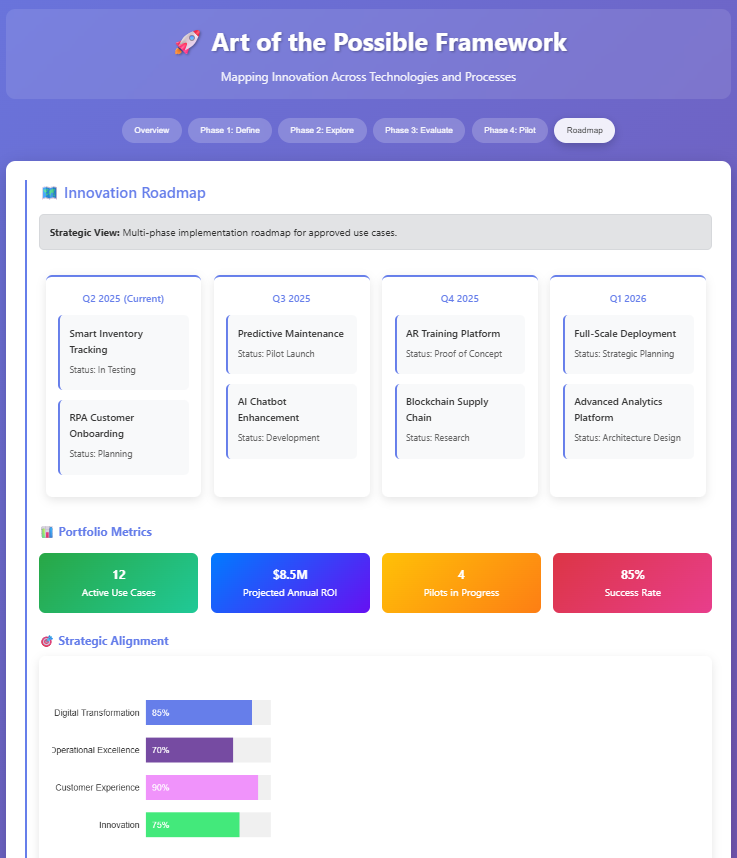
Beyond the four phases, the AOP Framework includes a Roadmap to plan long-term success. It organizes ideas by priority across timeframes (e.g., next quarter, next year). High-priority solutions might launch soon, while others are slated for future exploration.
The roadmap also tracks big-picture metrics, like the number of active projects or expected returns, giving leaders a clear view of innovation’s impact. It’s a tool for aligning today’s efforts with tomorrow’s goals.
Conclusion: The Power of Possibility
The Art of the Possible Framework isn’t just a process — it’s a mindset. It invites organizations to dream big, then equips them to turn those dreams into reality with clarity and purpose. By defining focus areas, exploring creative solutions, evaluating their potential, and piloting the best ideas, the framework transforms innovation from a buzzword into a tangible force for growth.
What makes the AOP Framework special is its ability to inspire while staying practical. It’s a guide for teams to collaborate, prioritize, and act with confidence, knowing their efforts align with strategic goals. Whether you’re solving today’s challenges or shaping tomorrow’s opportunities, the AOP Framework shows what’s possible — and helps you make it happen.
Ready to start? Embrace the Art of the Possible and unlock your organization’s full potential.
Create AI agents for Innovation that work for you!
Try here for Free – Build Your Own AI Agent
Credits to Claude.ai by Anthropic and Grok by xAI, for assisting with MVP screens and content refinement.

Leave a comment